V THE FIRST
PROLOGUE
Page 1
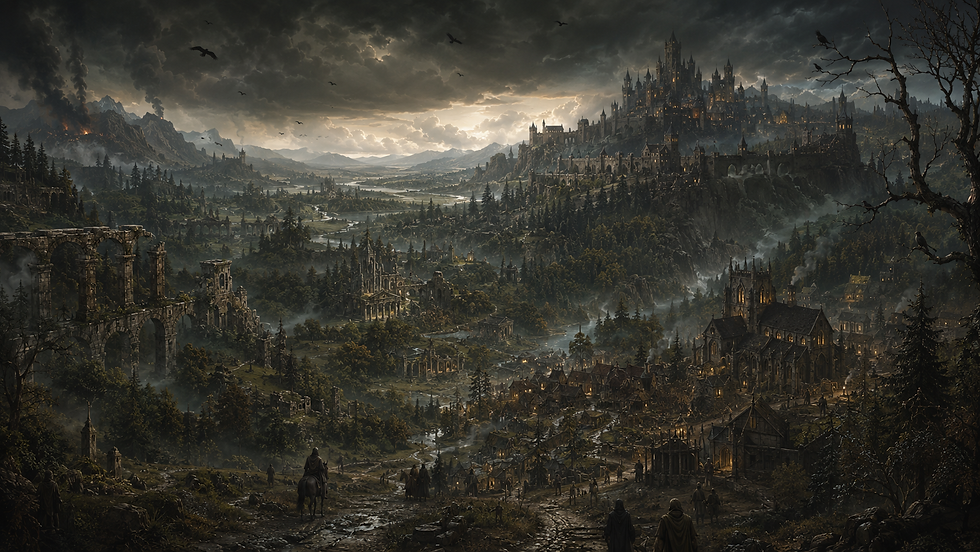
The Dark

"The Dark Ages were darker than we care to remember.
And the Middle Ages?
Hardly brighter."


HUNGARY
1300 AD

Hungary
Early 1300 AD
At the dawn of the fourteenth century, the Kingdom of Hungary lay fractured—its ancient crown contested not by one sovereign will, but by rival claimants and war-hardened magnates who ruled their provinces like private realms. The death of Andrew III had left the throne exposed, and two young kings clawed at it from opposite sides of Europe.
One Kingdom. Two Kings
One was Charles I
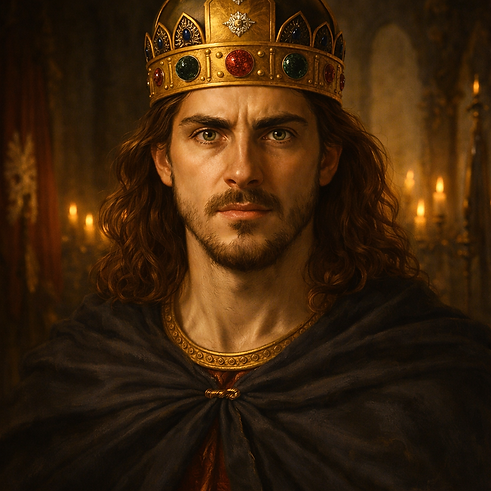
Charles I
King of Hungary
Charles I of Hungary, the Angevin prince backed by papal favor and Neapolitan ambition, patient and relentless in his claim. Between them stretched a kingdom in pieces—barons enthroned in their own fortresses, bishops weighing allegiance like coin, and a crown that no single hand could yet firmly grasp.
The other one was an 11 year old boy,
Wenceslaus III

Wenceslaus III
King of Hungary
Wenceslaus III, heir of the Přemyslid line, crowned in Székesfehérvár and styled Ladislaus by Hungarian charter, yet dependent on shifting loyalties and the fading authority of his house.
He was born on 6 October 1289, and was 11 years old when he was crowned King of Hungary on 27 August 1301. The Hungarian lords elected the young Přemyslid prince soon after, making him a child-king at the center of a dynastic struggle.
“Charles I was double the age of his rival,
yet he too was just a boy.
22 at the time.
The real power behind both claims rested with factions of nobles, foreign courts, and the papacy rather than the boys themselves.

BUDA ROYAL CASTLE
Buda, Hungary
For centuries, the Royal Castle of Buda stood as the supreme seat of power in the Kingdom of Hungary, its commanding silhouette rising above the Danube as both fortress and palace, where the destinies of kings and kingdoms were shaped. Successive dynasties expanded and transformed its walls, each leaving its own mark upon the citadel while preserving its role as the political and ceremonial heart of the realm. From its earliest medieval fortifications to its flourishing Gothic palaces, the castle evolved into a vast complex of towering keeps, fortified gatehouses, crenellated curtain walls, soaring chapels, royal halls, and arcaded courtyards carved from pale limestone and crowned with copper roofs. Within its walls, monarchs received ambassadors, convened councils, celebrated victories, and safeguarded the Crown of Saint Stephen, while beyond its ramparts the thriving city of Buda prospered beneath its protection. Though time, conquest, and reconstruction would reshape its appearance across the centuries, the castle remained an enduring symbol of Hungarian sovereignty—its stones bearing witness to triumph and tragedy alike, a monument where history, architecture, and royal ambition converged above the waters of the Danube.
The king roared, his word echoing through history

“I will drag him by the beard out of his mountains,
like a shepherd drags his sheep.”
— Charles I of Hungary

In the early 14th century, the warlord Duke of Wallachia becomes disloyal to the crown of Hungary.
His name,
Basarab.

Basarab
The Founder
Born around 1270, Basarab was the son of Radu the Black, remembered as the founder of Wallachia and the first great architect of its independence. Raised amid the rugged mountains and fiercely guarded traditions of his homeland, Basarab inherited not only his father's blood, but his determination to see Wallachia endure.
Shrewd, calculating, and possessed of uncommon valor, Basarab was a formidable ruler long before he wore a crown. Though once bound to the Hungarian Crown, his loyalty began to fracture as King Charles demanded greater submission from Wallachia and treated its prince as little more than a mountain brute who should know his place. Basarab saw things differently. He believed his land was not meant to remain a vassal to a foreign king—and he was willing to risk everything to prove it.
Go


Prologue Index

P-1

P-2


P-3
P-4


